Quick Taste
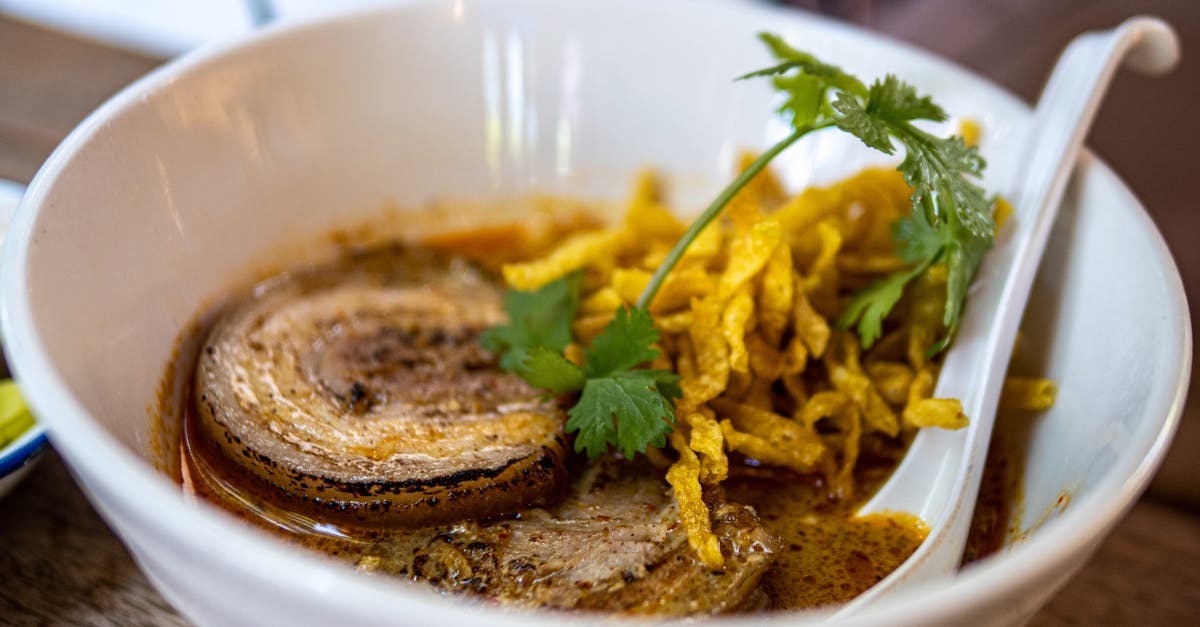
Khao soi is a coconut curry noodle soup built on two textures: soft egg noodles simmered in a rich, turmeric-gold coconut broth, topped with a nest of deep-fried crispy noodles that shatter when you press them into the curry. The broth is warm rather than fiery — turmeric, black cardamom, galangal, and lemongrass do the heavy lifting, with coconut milk rounding everything into a creamy, aromatic base. A bone-in chicken drumstick is the classic protein, slow-cooked until it falls apart. On the side: a squeeze of lime, sliced shallots, pickled mustard greens, and a spoonful of roasted chili paste. You mix the condiments yourself — each bowl is meant to be tuned to your own balance of sour, salt, and heat.
A bowl costs 40-70 THB ($1.10-$1.90) at most local spots. Portions are large enough that one bowl is a full meal.
The Story Behind the Dish
Khao soi didn't start in Thailand. The dish traces back to the Chin Haw — Chinese Muslim (Hui) traders from Yunnan who ran caravan routes through Shan State in Myanmar, through Laos, and down into Northern Thailand from the 18th to early 20th centuries. Along the way, it picked up Burmese characteristics — particularly from ohn no khauk-hswe, a Burmese coconut noodle soup still eaten in Shan State today. The name "khao soi" likely derives from the Burmese "khauk-hswe," meaning simply "noodles."
When the dish settled in Chiang Mai, Thai cooks remade it. They swapped in local curry paste — turmeric, galangal, lemongrass, black cardamom, coriander seed — and added coconut milk in place of the lighter Burmese broth. The deep-fried crispy noodle topping is a distinctly Thai addition. Because of its Muslim origins, the dish was traditionally halal — chicken or beef, never pork — and many shops in Chiang Mai still follow that rule.
The result is a dish that belongs to no single tradition. It's Yunnanese-Muslim, Shan, Burmese, and Northern Thai all at once — a product of Chiang Mai's position on the Golden Triangle trade route.
How Locals Eat It
Khao soi is a lunch dish. Most shops that specialize in it open around 10 a.m. and close by 2 p.m. — when the pot runs dry, they're done. Locals don't eat it for dinner.
The ritual: your bowl arrives with the condiment plate already on the table — pickled mustard greens (phak kat dong), sliced shallots, a lime wedge, and a small dish of nam phrik pao (roasted chili paste). You squeeze the lime first, add shallots, tear the pickled greens into the broth with your fingers, and spoon in chili paste to taste. Then you crush the crispy noodles into the curry. Eating them separately is fine, but pressing them into the broth so they half-soften is the local move.
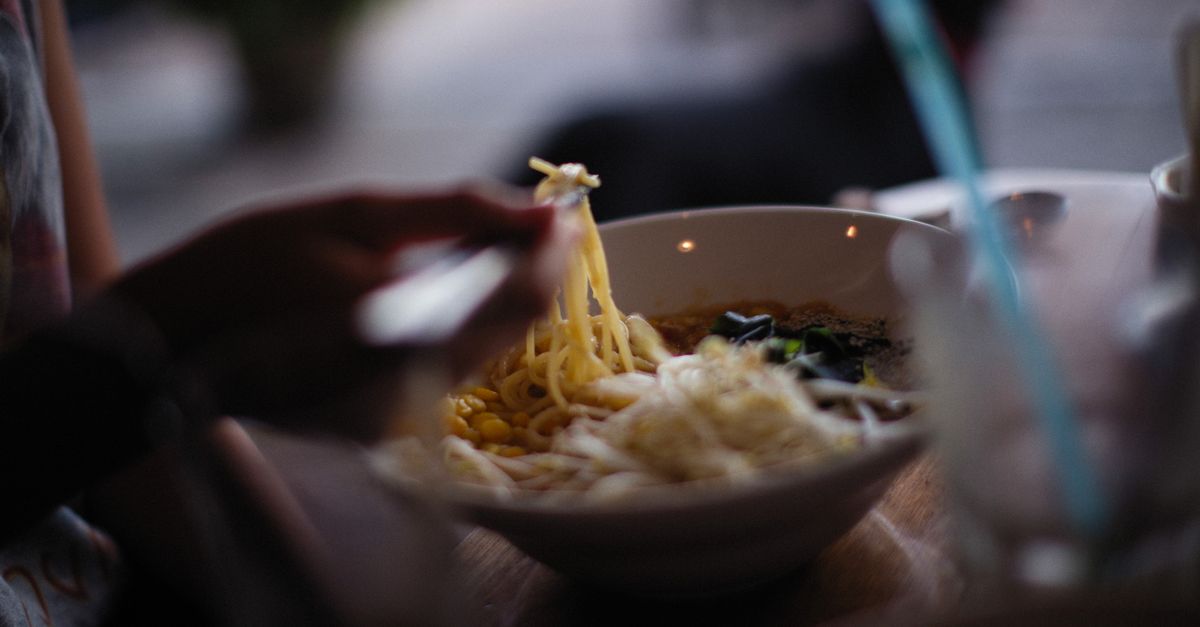
Most Thais eat khao soi with chopsticks for the noodles and a spoon for the broth — the spoon does most of the work. A side of fried pork rinds (khaep moo) is a common add-on, used to scoop up extra curry.
The drink pairing is straightforward: iced Thai tea (cha yen) or a cold Singha or Chang beer. Nobody orders water with khao soi unless they're already full.
Where to Find It
Khao Soi Khun Yai
Sri Poom 8 Alley, Tambon Si Phum (look for the brown gate next to Wat Khuan Khama — the entrance is hidden behind a wall). 40-60 THB per bowl. Open 10 a.m.-2 p.m., closed Sundays. This is the most famous khao soi shop in Chiang Mai — perpetually packed, no reservations. The broth is thick and heavy on the coconut, the chicken falls off the bone. Write your order on the slip of paper at the counter and put it on the spike. Go before 11:30 or expect a wait.
Khao Soi Lung Prakit Kad Kom
53 Suriyawong 5 Road, Tambon Hai Ya. Featured on Netflix's Somebody Feed Phil. Slightly spicier than Khun Yai, with a darker curry paste and a more complex heat. The shop is small and the owner is particular about the recipe. Cash only.
Khao Soi Mae Sai
29/1 Ratchaphuek Alley, Tambon Chang Phueak. Recognized by the Michelin Guide. The curry here is a touch lighter than Khun Yai — less coconut-heavy, more herb-forward. A good choice if you want to taste the spice blend more clearly. The beef version (neua) is particularly good here.
Khao Soi Wulai
Near Wat Lok Molee on Wulai Road. 30 THB per bowl — the cheapest khao soi worth eating in the old city. The shop is tiny, the portions are honest, and the broth has a home-cooked quality that the famous spots sometimes lose to scale.
Huen Phen
112 Rachamankha Road. Starting at 60 THB. This is a full Northern Thai restaurant, not a khao soi specialist, but the version they serve is excellent — and the setting (a traditional teak house filled with antiques) is more comfortable than the specialist shops. Good if you're eating with someone who wants to order something other than khao soi.
City vs. Countryside Flavor
In Chiang Mai proper, khao soi tends toward thick, creamy, and rich — heavy coconut milk, a well-developed curry paste, generous portions. Shops compete on depth of flavor and consistency. The famous spots have perfected their recipes over decades and don't deviate.
Outside the city — in villages around Mae Hong Son, Chiang Rai, and the Shan border areas — the broth gets lighter. Less coconut milk, more broth, a thinner consistency. The spice mix leans more toward the dish's Burmese roots: more turmeric, less of the Thai curry-paste complexity. The noodles might be hand-cut rather than factory-made egg noodles. Portions can be smaller, but the price drops to 25-35 THB.
The countryside version isn't better or worse — it's closer to the dish's origins. If you've eaten khao soi at the famous Chiang Mai shops and want to understand where it came from, a bowl in a roadside shop near the Myanmar border is a different experience worth having.
Cost, Portions, and Ordering Tips
Prices: 30-70 THB ($0.80-$1.90) at local shops. Tourist-area restaurants charge 80-120 THB ($2.15-$3.25) for the same dish with a nicer setting. You should never pay more than 150 THB for khao soi anywhere in Chiang Mai.
Portions: One bowl is a full meal. The noodle portion is substantial and the broth is filling. If you're still hungry, order a side of fried pork rinds (khaep moo, 20-30 THB) rather than a second bowl.
Ordering in Thai:
- Chicken: "khao soi gai" (ข้าวซอยไก่) — the default
- Beef: "khao soi neua" (ข้าวซอยเนื้อ) — heartier, richer
- Tofu/vegetarian: "khao soi tao hu" (ข้าวซอยเต้าหู้) — available at most shops but not all
- "Mai phet" (ไม่เผ็ด) = not spicy. "Phet nit noi" (เผ็ดนิดหน่อย) = a little spicy.
Payment: Almost all khao soi shops are cash only. Carry small bills — 20s and 50s.
Timing: Go between 10:30 a.m. and noon. The best shops sell out by 1-2 p.m. Arrive after noon at Khun Yai and you'll find an empty pot.
What to Know Before You Try It
Spice level: Khao soi is warm, not scorching. The base curry is mild to medium — the heat comes from the chili paste on the side, which you control. If you can handle a standard yellow curry, khao soi won't surprise you.
Allergens: The broth contains coconut milk (always), fish sauce (almost always), and sometimes shrimp paste in the curry base. If you have a shellfish allergy, ask "mai sai kapi" (ไม่ใส่กะปิ — no shrimp paste) and "mai sai nam pla" (ไม่ใส่น้ำปลา — no fish sauce), but understand that most shops make the broth in bulk and can't adjust it per bowl. The noodles are wheat-based egg noodles — not gluten-free.
The crispy noodle timing: Eat the crispy noodles within 5 minutes of serving. Once they sit in the broth, they go soft and you lose the entire texture contrast that makes the dish work. Press a few into the curry right away, eat the rest while they're still crunchy on top.
Street food safety: Choose busy shops — high turnover means fresh broth. The famous spots serve hundreds of bowls a day; the pot never sits.
Common Mistakes Visitors Make
Not using the condiments. The pickled mustard greens, shallots, lime, and chili paste aren't decoration — they're part of the dish. A bowl of khao soi without the condiments is like a taco without salsa. Squeeze the lime, add the greens, spoon in the chili paste. This is how it's designed to be eaten.
Letting the crispy noodles go soggy. The crispy noodles are meant to shatter against the soft noodles in the broth. If you ignore them for 10 minutes while you eat the soup, they turn into the same texture as everything else. Eat them first or press them into the curry immediately.
Ordering at dinner. Most serious khao soi shops are lunch-only (10 a.m.-2 p.m.). The places that serve khao soi at dinner are usually general restaurants where it's one item on a long menu — fine, but not the same as a dedicated shop that makes nothing else.
Skipping the bone-in chicken. Some tourist-oriented places offer boneless chicken khao soi. The bone-in drumstick is the real version — the bone adds flavor to the broth and the dark meat has more character. Ask for "gai" and you'll get the drumstick.
Sticking to the famous shops. Khun Yai and Lung Prakit are excellent, but a 30 THB bowl at a no-name shop on a side street in Santitham or Chang Phueak can be just as good. The famous spots have perfected consistency; the small shops sometimes deliver brilliance.
Frequently Asked Questions
What makes khao soi different from other Thai curries?
The coconut-curry broth is similar to other Thai curries, but two things set khao soi apart: the crispy fried noodle topping (no other Thai noodle dish does this) and the Burmese-influenced spice blend — black cardamom, turmeric, and galangal in proportions you won't find in a southern Thai curry. It's also a noodle soup, not a rice dish, which is unusual for Thai curries. (rachelcooksthai.com)
Can I get vegetarian khao soi in Chiang Mai?
Yes — most shops offer a tofu version (khao soi tao hu), though the broth typically still contains fish sauce or shrimp paste. For a fully vegan version, look for dedicated vegetarian restaurants in the Nimman area or the Old City. The vegetarian takes are decent but the dish was designed around bone-in chicken, so the tofu version is a different experience. (hot-thai-kitchen.com)
Is khao soi the same as Burmese ohn no khauk-hswe?
They share a common ancestor but they're different dishes now. Ohn no khauk-hswe uses a lighter broth, different noodles, and doesn't include the crispy fried noodle topping that defines Thai khao soi. The Thai version also uses a more complex curry paste with galangal and lemongrass. Think of them as cousins, not twins. (en.wikipedia.org)
How spicy is khao soi?
The base broth is mild to medium — warm and aromatic rather than fiery. The heat is controlled by the roasted chili paste (nam phrik pao) served on the side. Start with half a spoonful and add more if you want it hotter. Even at full chili paste, khao soi is less spicy than a standard som tam (papaya salad). (eatingthaifood.com)
Related Golden Horizons Guides
- Chiang Mai on $1,400/Month
- Best Countries to Retire Abroad on a Budget
- Retiring Abroad Checklist for Americans
- Healthcare Abroad for American Retirees
About Golden Horizons
Golden Horizons helps Americans approaching retirement or already retired explore what their Social Security, pension income, and savings might make possible abroad. We focus on the decision that matters: what your money may make possible, whether you can legally stay, whether healthcare and ordinary daily life work for you, and what you should test before committing. Travel first. Test the reality. Then decide.
Final Bite
Khao soi is the single dish that defines Chiang Mai eating. A 40 THB bowl at a specialist shop — bone-in chicken falling apart in turmeric-gold coconut curry, crispy noodles shattering on top, lime and pickled greens on the side — is one of the best meals in Southeast Asia for the price of a vending machine coffee back home. Go before noon, bring cash, use the condiments, and eat the crispy noodles before they go soft.