Dakos in Crete: The Barley Rusk Salad You'll Crave After One Bite — Local Food Guide

Quick Taste
Dakos is Crete's simplest and oldest dish — a slab of twice-baked barley rusk run briefly under water until the surface softens, then piled with grated ripe tomato, crumbled xinomyzithra (a tangy Cretan whey cheese), Cretan extra virgin olive oil, dried oregano, and sometimes a few capers or Kalamata olives. The texture is what makes it: a base that's crunchy at the center and yielding at the edges, soaked through with tomato juice and oil, under a layer of cool, crumbly cheese. It tastes like concentrated summer — sweet-acid tomato, grassy olive oil, sharp salty cheese, and the nutty grain of the barley rusk underneath.
A plate of dakos at a neighborhood taverna in Heraklion, Chania, or Rethymno costs €4–€7 (~$4.35–$7.60). At a seaside tourist restaurant, expect €7–€10. For Americans thinking about spending a month — or eventually part of retirement — in Crete, dakos is a cost-of-living barometer: if a filling appetizer costs €5, a freddo cappuccino runs €3, raki arrives free at the end of every meal, and a one-bedroom apartment in Heraklion rents for €670 a month, the arithmetic starts to look serious. The dish is also a taste test: if the olive oil is green and peppery, the tomato is warm from the sun, and the rusk was baked that week at a local bakery, you're eating in the right place. If the rusk is stale and the oil is pale, move on.
The Story Behind the Dish
Dakos predates modern Crete by centuries. Barley was the dominant grain on the island long before wheat became common — the dry, mountainous terrain favored it — and Cretan farmers baked their bread twice to create paximadi (rusks) that would last for weeks without spoiling. Shepherds carried paximadia into the mountains. Fishermen took them to sea. The twice-baked rusk was survival food: calorie-dense, portable, and nearly indestructible.
The dish as it's eaten today — rusk, tomato, cheese, oil — took shape after tomatoes arrived in Crete from the Americas in the 17th–18th century. Before that, the rusk was softened with water or wine and eaten with whatever was at hand: olives, cheese, wild greens.
The name "dakos" refers to the rusk itself, but in western Crete — particularly around Rethymno — the dish is called koukouvagia, meaning "owl." One local story traces this name to a taverna owner near Rethymno in the 1950s who was nicknamed Koukouvagia; he served the rusk-and-tomato dish so consistently that the name stuck. Another explanation is that the round rusk topped with two olive "eyes" resembles an owl's face when viewed from above.
Dakos has no UNESCO status and no protected-designation claim, but it is the dish Cretans point to when they explain why the island's traditional diet became a reference point for Mediterranean diet research. The Seven Countries Study, launched in the late 1950s, identified Crete as having some of the lowest rates of heart disease in the world, and the daily diet of olive oil, barley, tomatoes, cheese, and wine — essentially the ingredients of dakos — was a central finding.
How Locals Eat It
Dakos is a meze dish — served as a starter, a side, or a light meal on its own. Cretans eat it at any time of day: as a quick lunch, as the opening plate at a taverna dinner, or as a snack alongside raki in the late afternoon. It is not a main course and never pretends to be one.
The traditional preparation is not fussy. The paximadi goes under the tap for two to three seconds — just long enough to dampen the surface, not soak it through. Oversoaking is the cardinal sin: the rusk should stay crunchy in the center. The tomato is grated on a box grater (never sliced), and the pulp is spooned over the rusk so the juice seeps in from the top. Xinomyzithra — a soft, tangy whey cheese made from sheep's or goat's milk — is crumbled over the tomato. Then a generous pour of olive oil, a pinch of dried oregano, and sometimes sea salt, capers, or a few olives.
Cretans eat it with their hands, picking up the rusk and biting through all the layers. Forks work but feel wrong.
At tavernas, raki (tsikoudia) arrives at the end of every meal — free, poured by the owner. It is not optional and it is not a sales tactic. It is Cretan hospitality. Dakos is one of the dishes that precedes the raki ritual: the meal starts light, moves through grilled meat or fish, and ends with fruit and raki. The dakos is the opening move.
Where to Find It
Every taverna in Crete serves dakos. The question is which ones make it well.
Heraklion: Taverna Alekos, a family-run spot in the old city, is known among locals for its Cretan meze spread including a solid dakos. Peskesi, near Lions Square, sources ingredients from its own farm in Archanes and serves a dakos with estate olive oil and local mizithra — expect to pay €7–€8 for a carefully composed version. For a more casual setting, the stalls around the Heraklion Central Market (1866 Market / Agora) sell paximadia by the bag so you can assemble your own, and several market-adjacent cafés serve dakos for €4–€5. Skoulas Café in Anogia (45 minutes south into the mountains) pairs dakos with apaki (smoked pork) and raki.
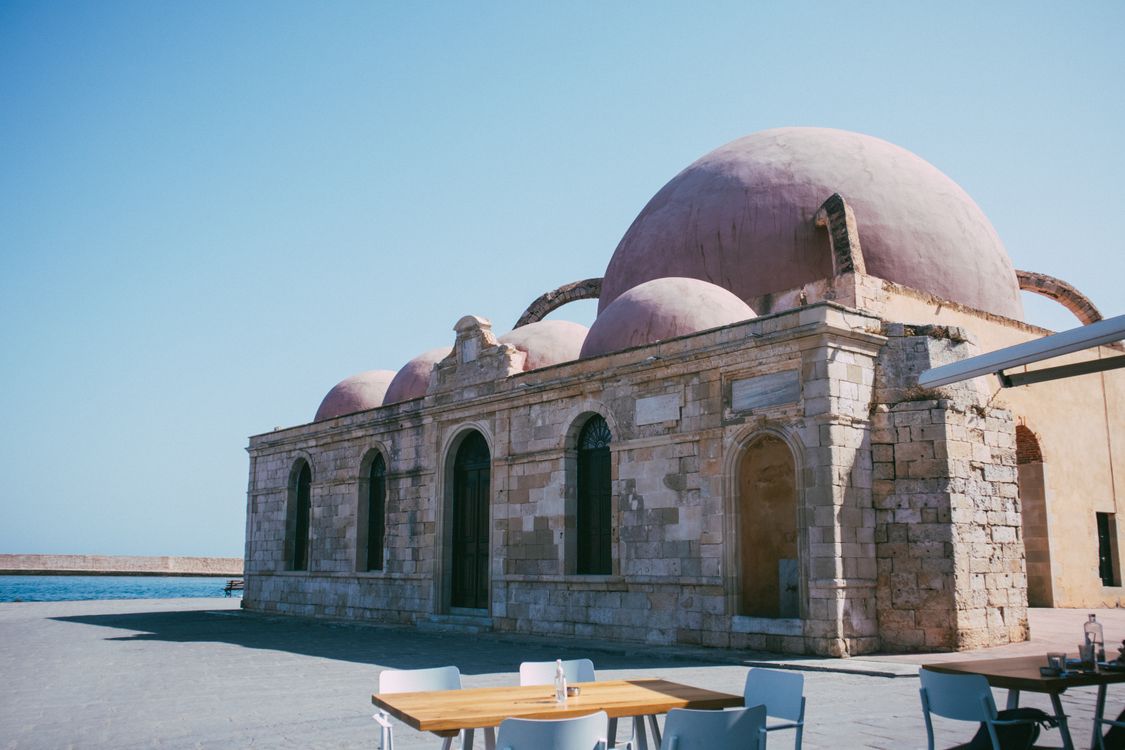
Chania: Tamam, in a converted Ottoman bathhouse in the old town, serves Cretan mezes including dakos with local xinomyzithra. Taverna To Stachi, family-run with daily Cretan specials, is a reliable spot for traditional dakos. Along the Venetian Harbor waterfront, tourist-facing restaurants charge €8–€10 for dakos; walk two blocks inland toward Splantzia and the same dish drops to €5–€6. Agora (the covered market) has produce vendors selling Cretan tomatoes and paximadia at local prices.
Rethymno: Avli Restaurant, in a restored 16th-century Venetian mansion, serves a refined dakos as part of its Cretan tasting menus — this is the fine-dining end of the spectrum, with curated olive oil and hand-crumbled anthotyro. For everyday dakos, the tavernas along Petychaki Street in the old town run €4–€6 and serve raki on the house.
Village tavernas (Sfakia, Loutro, Anogia, Zaros): The best dakos on the island is often at a village taverna where the tomatoes came from the garden out back, the oil was pressed last November, and the paximadi was baked at the bakery next door. Prices drop to €3–€5. I Strofi tis Gefsis in Vizari, south of Rethymno, has served mountain-village cooking for 37 years and is the kind of place where dakos tastes like a different dish entirely from the tourist-harbor version.
Regional Variations
The base recipe is consistent across Crete, but the cheese changes everything. In eastern Crete (Heraklion, Lasithi), xinomyzithra — sour, crumbly, made from whey — is the default. In western Crete (Chania, Rethymno), you're more likely to get anthotyro, a softer, slightly sweet fresh cheese. Some tavernas use feta, which is technically not traditional for dakos but has become common in tourist areas because visitors recognize it. The purist choice is xinomyzithra; the crowd-pleasing choice is feta; the connoisseur choice is anthotyro.
Toppings vary by household and season. Capers appear more in eastern Crete. Olives — Throumba olives, wrinkled and dry-cured on the tree — show up in mountain villages. Some places add a drizzle of petimezi (grape molasses) for sweetness. A few modern Cretan restaurants top dakos with marinated anchovies or smoked sardines, adding protein and brine.
The rusk itself varies. Traditional Cretan paximadi is 100% barley flour — dense, dark, and nutty. Bakeries in tourist towns increasingly sell mixed-flour versions (barley-wheat blends) that are lighter and easier to eat but lose the earthy flavor. If the rusk is pale and soft, it's probably wheat-dominant. The dark, heavy, hard-to-break rusk is the real one.
Portion size also shifts. In villages, dakos is one large round rusk — a full plate. In Heraklion and Chania restaurants, it may arrive as two or three smaller rusks arranged on a plate, which is more photogenic but less traditional.
Cost, Portions, and Ordering Tips
Dakos prices across Crete in 2026:
- Village taverna or market café: €3–€5 (~$3.25–$5.45)
- Neighborhood taverna in Heraklion/Chania/Rethymno: €4–€7 (~$4.35–$7.60)
- Seaside tourist restaurant: €7–€10 (~$7.60–$10.90)
- Fine-dining Cretan restaurant: €8–€12 (~$8.70–$13.05)
One plate of dakos is enough as a starter for two people sharing, or a light lunch for one. It is filling — the barley rusk is dense, and the olive oil adds calories.
Order by saying: "Éna dako, parakaló" (Ένα ντάκο, παρακαλώ). If you want the traditional cheese: "Me xinomyzithra" (Με ξινομυζήθρα). For feta instead: "Me féta" (Με φέτα).
Ask for the olive oil by name if the taverna produces its own — many in Crete do, especially in the Messara Plain south of Heraklion and around Kolymvari west of Chania. Cretan olive oil is predominantly Koroneiki variety, green, peppery, and intense. It makes or breaks the dish.
Cash is still preferred at village tavernas and market stalls. Restaurants in Heraklion old town, Chania's waterfront, and Rethymno accept cards. ATMs are reliable in towns; scarce in mountain villages.
Raki at the end of the meal is free. Do not order it separately unless you want to pay for a premium bottle. The house raki is complimentary — it is Crete's version of the after-dinner mint.
For Americans calibrating cost of living: a day of eating in Crete — freddo cappuccino at a café (€2.50–€3.50), dakos and a horiatiki salad at a taverna for lunch (€9–€14 for both), a souvlaki or gyro wrap from a street stand in the afternoon (€3–€4), and grilled fish with wine at a seaside taverna for dinner (€18–€25 per person) — totals roughly €35–€47 ($38–$51). Monthly food spending for a single person eating out regularly lands at €700–€900. Add Heraklion rent at €670 for a one-bedroom, utilities at €200, and local transport at €2 per bus ride, and a comfortable solo month costs €1,600–€2,000. Crete is not the cheapest corner of Europe, but it remains significantly less expensive than the mainland Greek islands like Santorini or Mykonos, and roughly 40–50% cheaper than comparable Mediterranean life in southern France or coastal Italy.
What to Know Before You Try It
Dakos is naturally vegetarian and almost vegan — the only animal product is the cheese, which can be omitted. The rusk contains barley (gluten), so it is not safe for celiac disease. Some tourist-oriented bakeries sell gluten-free rusks, but they are not widely available at traditional tavernas — ask before ordering.
The cheese is made from sheep's or goat's milk, not cow's milk. If you have a cow-dairy allergy but tolerate sheep/goat dairy, dakos is safe. If you avoid all dairy, ask for "choris tyri" (χωρίς τυρί — without cheese) and get extra olive oil and olives instead.
The olive oil quantity is generous. A single dakos plate can contain 2–3 tablespoons of oil. This is intentional — the oil is a primary ingredient, not a garnish. Cretan cuisine runs on olive oil the way French cuisine runs on butter.
Tomato quality is seasonal. From June through September, Cretan tomatoes are at their best — warm, sweet, intensely flavored. In winter and early spring, the tomatoes are less remarkable, and some tavernas switch to sun-dried tomatoes or preserved tomato paste on the rusk. If you're visiting between November and April, ask whether the tomatoes are fresh or preserved.
Common Mistakes Visitors Make
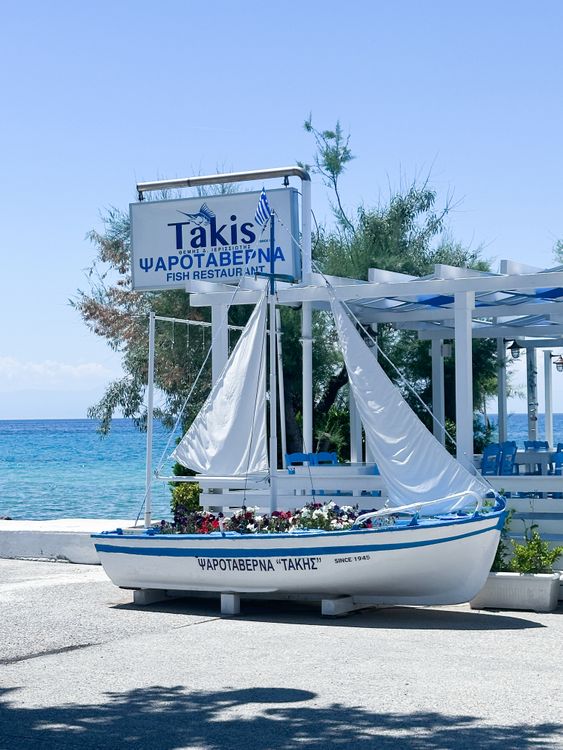
Ordering dakos at a waterfront tourist restaurant and judging the island by it. Harbor-front places in Chania or Heraklion charge €8–€10 for a version made with pale wheat rusks, industrial olive oil, and feta from the mainland. Walk two blocks inland, and the same dish costs half as much and tastes twice as good. The tavernas where Cretans eat lunch are never on the waterfront.
Comparing it to bruschetta. Visitors who expect Italian bruschetta are confused when a hard, dense rusk arrives instead of soft grilled bread. Dakos is not bruschetta. The rusk is meant to resist the tomato's moisture and stay partly crunchy — that tension between soft topping and firm base is the entire point.
Soaking the rusk too much. If you're assembling your own (at a market or apartment kitchen), the rusk goes under running water for two to three seconds — surface only. If you submerge it or let it sit in water, it disintegrates into porridge. The center should crack when you bite, not mush.
Ignoring the olive oil. Some visitors, conscious of calories, ask for oil on the side or skip it. Without Cretan olive oil, dakos is just wet bread with tomato. The oil is not a condiment — it is one of the four core ingredients. Taste it on its own first; if it's peppery, green, and slightly bitter at the finish, you're at the right taverna.
Skipping the raki. When the owner brings a small carafe of raki and a plate of fruit at the end of the meal, it is a gift — refusing it is polite but reads as cold. Take a sip. It is 40% alcohol, tastes like grappa's rougher cousin, and is the island's social glue.
Frequently Asked Questions
What does dakos taste like?
Sweet-acid grated tomato, grassy and peppery Cretan olive oil, tangy crumbled xinomyzithra cheese, dried oregano, and the nutty grain of a twice-baked barley rusk. The flavor depends almost entirely on the quality of the olive oil and the ripeness of the tomato — when both are good, dakos tastes like concentrated summer. When either is mediocre, it tastes like wet bread with toppings.
How much does dakos cost in Crete in 2026?
A plate of dakos costs €3–€5 at a village taverna, €4–€7 at a neighborhood taverna in Heraklion or Chania, and €7–€10 at a tourist-facing seaside restaurant. Fine-dining versions with curated olive oil and artisan cheese run €8–€12. Prices are stable across seasons but higher in July–August when tourist volume peaks.
Is dakos the same as a Greek salad?
No. A Greek salad (horiatiki) is a composed salad of sliced tomato, cucumber, onion, green pepper, olives, and a block of feta, dressed with olive oil. Dakos is built on a barley rusk base — it is closer to an open-faced sandwich than a salad. The two appear on the same menu but are different dishes with different textures and purposes. Horiatiki is a side; dakos can be a light meal.
Can I buy paximadi rusks to bring home?
Yes. Cretan bakeries and supermarkets sell paximadi in sealed bags that keep for months. The Heraklion Central Market and Chania's Agora both have vendors selling barley rusks by weight. Look for 100% barley flour (kriθaρένιο — kritharénio) on the label. Mixed-flour versions are lighter but less authentic. Packed rusks travel well in checked luggage — they're already rock-hard, so there's nothing to break.
Related Golden Horizons Guides
- Best Countries to Retire Abroad on a Budget
- Healthcare Abroad for American Retirees
- Retiring Abroad Checklist for Americans
- Visa Rules for Americans Retiring Abroad
About Golden Horizons
Golden Horizons is the retirement abroad magazine for Americans who aren't done yet.
Final Bite
Dakos tells you what Crete values at the table: four ingredients, all of them local, none of them expensive, prepared in under three minutes. A €5 plate at a village taverna south of Rethymno — barley rusk from the bakery next door, tomato from the garden, oil from last November's press, cheese made that morning — is a more honest introduction to the island than any resort brochure. If that sounds like a reasonable lunch, and the €670 apartment and the free raki and the €2.50 coffee that go with it sound like a reasonable life, Crete might be the place where your afternoon nap starts at 3 PM and your dinner reservation is whenever the taverna owner decides to open.