Bandeja Paisa in Colombia: What the Giant Platter Actually Costs — Local Food Guide
Quick Taste
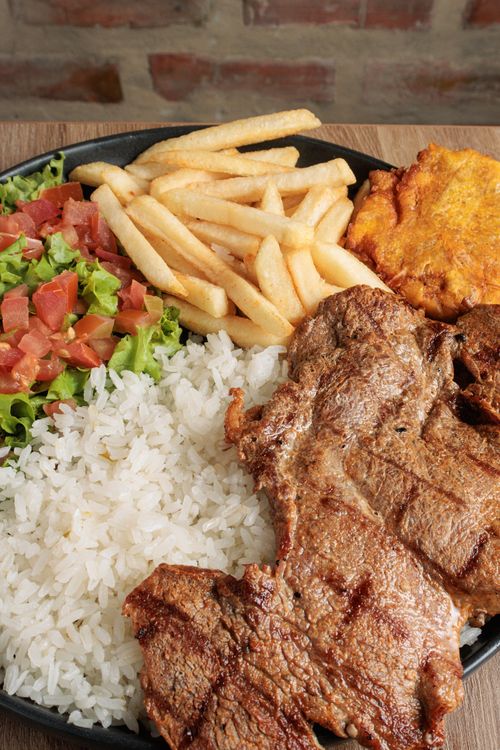
Bandeja paisa is Colombia's largest single-plate meal — fríjoles antioqueños (red beans stewed with pork), white rice, chicharrón, carne molida, chorizo, a fried egg, fried ripe plantain, avocado, hogao, and a corn arepa, all arranged on an oval platter that barely fits the table. The taste profile runs from the earthy, slow-cooked sweetness of the beans through the shattering salt-and-fat crunch of the chicharrón, the smoky snap of the chorizo casing, and the cool, soft relief of avocado between bites. Medellín is where the dish was born and where it's still eaten best — thicker chicharrón, richer beans, and lower prices. Bogotá serves it well but treats it as a regional import, often in smaller portions at higher prices.
The "$3.50 bandeja paisa" is real, but only at the cheapest end: a basic corrientazo (set lunch) in Medellín's Centro or Belén neighborhoods runs 15,000–18,000 COP, which at recent exchange rates lands around $3.50–$4.30. That is the floor. At a named sit-down restaurant like Mondongo's in El Poblado, the same platter now costs 59,000 COP (~$14). The Medellín citywide average, per a 2026 El Colombiano price survey, is 48,600 COP (~$11.50). Prices rose 46–48% between 2021 and 2026, driven by inflation and a 23.7% minimum-wage hike. For Americans thinking about spending a month — or eventually part of retirement — in Colombia, this price ladder tells you more about daily costs than any expat blog: if a tinto (street coffee) is 500 COP ($0.12), a metro ride is 3,820 COP ($0.91), and a full bandeja paisa at a neighborhood corrientazo runs $4 while the same thing at a tablecloth restaurant costs $14, you can calibrate exactly where you want to live on that spectrum.
The Story Behind the Dish
Bandeja paisa traces to the arrieros — the muleteers who hauled coffee, salt, and goods along Antioquia's mountain trails in the 19th century. The meal was built for caloric density: laborers needed 1,500+ calories before noon, and everything on the platter — beans, rice, pork, plantain, egg — could be prepared from what grew or was raised locally. It was not a composed "dish" in the culinary sense; it was survival fuel.
The platter as a named, standardized concept didn't appear until 1950, when COTELCO (the Colombian Hotel and Tourism Association) formally recognized "bandeja paisa" as Antioquia's signature regional dish to promote local gastronomy. Before that, it was just what paisas ate. In 2005, the Colombian government proposed making it the national dish under the more regionally neutral name "bandeja montañera," but the proposal drew pushback — bandeja paisa represents one region, not all of Colombia, and coastal, Amazonian, and Pacific communities objected. It has no official national-dish status and no UNESCO intangible-heritage designation, despite what some tourism copy claims.
What does have protected status is the identity rule paisas enforce among themselves: the fríjoles antioqueños are the dish's anchor. Made with cargamanto beans (a local cranberry-type variety) cooked slowly with pork hock, carrot, green plantain, and aliños, then finished with hogao stirred through, they are thick, reddish, and savory-sweet. A widely cited local maxim: "If it's not fríjoles antioqueños, it's not bandeja paisa." The meats can vary. The beans cannot.
How Locals Eat It
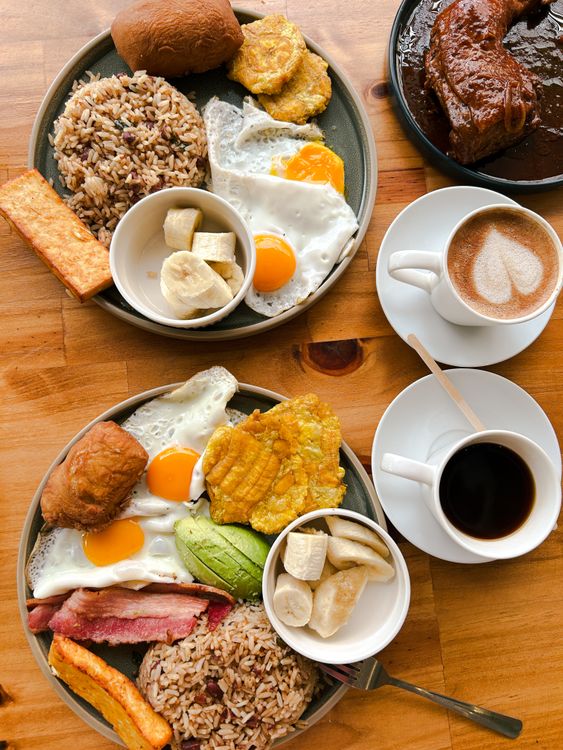
Bandeja paisa is an almuerzo dish — eaten between noon and 2:00 PM. Paisas do not order it for dinner. The portions run 1,200–2,000+ calories depending on the restaurant, and most Colombians who eat it skip dinner that day entirely. Breakfast the next morning is calentado paisa — last night's leftover rice and beans pan-fried together with an egg, arepa, and maybe a bit of chorizo. Calentado ranked 16th on TasteAtlas's "50 Best Breakfasts in the World" list in 2025. The cycle of bandeja-to-calentado is how a paisa household eats.
The eating order matters. Locals spoon the beans over the rice so every forkful has both — eating them separately misses the point. The fried egg goes on top of the rice, yolk broken so it runs into the beans. Chicharrón and chorizo are picked up by hand. Avocado slices are eaten between bites of meat to cut the richness. The arepa — a flat, grilled corn cake — works as a vehicle for scooping.
The traditional drink pairing is not beer (that's a modern restaurant custom) but agua de panela — unrefined cane sugar dissolved in water, served cold with a squeeze of lime. It has a caramel-molasses flavor and is Colombia's most ubiquitous drink. In some traditional homes, bandeja paisa is followed by mazamorra con leche — cracked corn kernels cooked in milk with panela — as a palate-cleansing finish. Beer (Club Colombia, Águila) is what restaurants now serve alongside the platter, at 6,000–8,000 COP ($1.40–$1.90) a bottle.
Where to Find It
Nearly every sit-down restaurant in Antioquia serves bandeja paisa, but quality and price vary sharply.
Medellín — Named Restaurants: Mondongo's, the most cited bandeja paisa institution in the city, has locations in El Poblado (Calle 10 #38-38) and Laureles (Carrera 70 #C3-43). A full platter costs 59,000 COP (~$14) as of early 2026 — up from 40,000 COP in 2021. Hacienda, a chain with six locations including Barrio Manila and Centro Comercial La Strada, is frequently called the city's best by local food writers, with full platters in the 45,000–55,000 COP range. La Matriarca (El Poblado, with branches in Envigado and Barranquilla) charges 54,000 COP. El Rancherito, a multi-location chain, comes in at 54,800 COP. These are sit-down restaurant prices — not what locals pay at lunch.
Medellín — Corrientazos and Markets: The real paisa lunch happens at corrientazos — set-lunch restaurants where working Colombians eat midday. In Laureles, Belén, and Centro, a corrientazo that includes bandeja paisa, a starter soup, and a fresh juice costs 15,000–22,000 COP ($3.50–$5.25). The citywide average corrientazo price is 18,000 COP ($4.29). Plaza Minorista José María Villa, Medellín's main market, has dozens of food stalls serving bandeja paisa for 27,000–45,000 COP — more than a corrientazo but still half of Mondongo's. Non-bandeja basic lunches at the Minorista start at 8,000–10,000 COP.
Bogotá: Casa Vieja in La Candelaria (established 1969) is the capital's most historically referenced spot for plato montañero (the Bogotá name for the same dish). In Chapinero, El Consulado Paisa (Carrera 11 #70A-44), Comedorcito Paisa (Calle 40C No. 13-14), and El Típico Envigadeño (Diagonal 53D No. 22A-05) serve it in the 18,900–40,000 COP range. Mid-range Bogotá restaurants charge 40,000–60,000 COP per plate. Tourist-facing restaurants in Usaquén or the T Zone can push past 80,000 COP with drinks.
Coffee Axis (Pereira, Armenia, Salento, Manizales): Smaller towns in the coffee region serve bandeja paisa at fondas with less markup. The beans tend to be thicker here, cooked longer with more pork hock. Prices run lower than Medellín — expect 20,000–35,000 COP at a fonda, sometimes with morcilla (blood sausage) included by default.
Prices are rising fast. Medellín restaurant association (Acodres) data shows corrientazo prices rose 11% from 2023 to 2025, with further increases in January 2026 following the minimum-wage hike. Treat any published price as a moving target and check the whiteboard menu by the door.
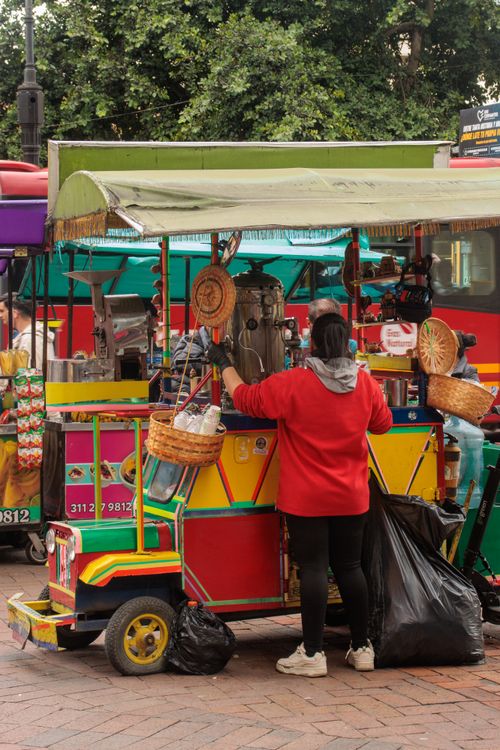
Regional Variations
The standard Medellín bandeja paisa has roughly ten components: fríjoles antioqueños, white rice, chicharrón, carne molida, chorizo, a fried egg, tajada (fried ripe plantain), aguacate, arepa, and hogao. There is no fixed canonical count — restaurants stretch the list to thirteen or fifteen by adding morcilla, a lime wedge, patacón (twice-fried green plantain alongside the ripe tajada), or a grilled steak cut.
Hogao — the sauce spooned over rice or stirred into beans — is Colombia's answer to sofrito. Scallions and tomatoes are the two required ingredients, cooked in oil with garlic, cumin, and salt, then simmered covered for about thirty minutes until thick and jammy. Without hogao, the platter feels flat.
In Bogotá, bandeja paisa gets adapted to bogotano tastes. Portions shrink. Chicharrón gets thinner. Some restaurants add an ensalada side (tomato, onion, cilantro) that would never appear on a traditional paisa plate. A "diet" version — chicken breast substituting for pork, chorizo and morcilla dropped — is marketed in the capital but would be laughed at in Antioquia.
The single fastest quality indicator between a good and bad bandeja paisa is the chicharrón. At a proper fonda or corrientazo, it is a thick slab of pork belly fried until the skin shatters and the fat underneath is soft and rendered. At a tourist restaurant, it's often a thin chip-like piece with no meat attached. If your chicharrón is a chip, you are at the wrong place. The morcilla test works too: if the restaurant includes it without being asked, the kitchen is cooking traditional.
Cost, Portions, and Ordering Tips
The full price landscape for bandeja paisa in 2026:
- Cheapest corrientazo (Medellín Centro, Belén): 15,000–18,000 COP ($3.50–$4.30)
- Almuerzo ejecutivo with soup and juice: 18,000–25,000 COP ($4.30–$5.95)
- Plaza Minorista market stalls: 27,000–45,000 COP ($6.40–$10.70)
- Named restaurants (Mondongo's, La Matriarca, Hacienda): 45,000–59,000 COP ($10.70–$14.05)
- Bogotá mid-range: 40,000–60,000 COP ($9.50–$14.30)
- Tourist zones (El Poblado shopping centers, Bogotá Zona T): 54,000–80,000+ COP ($12.85–$19+)
Order by saying: "Una bandeja paisa, por favor." For a smaller portion, ask: "¿Tienen media bandeja?" — this is a real menu item at many places, running 60–70% of the full price with all the same components in reduced amounts. For extra chicharrón: "¿Puedo pedir chicharrón adicional?" — expect 5,000–8,000 COP extra.
Cash is still required at corrientazos and market stalls. Sit-down restaurants in El Poblado, Laureles, and Chapinero accept cards. ATMs (Bancolombia has the lowest fees) dispense up to 600,000–900,000 COP per withdrawal.
Tipping: at corrientazos, none expected. At sit-down restaurants, the waiter will ask "¿Desea incluir el servicio?" — a 10% propina suggested on the bill. You can accept or decline.
For Americans considering a longer stay, here is how a bandeja paisa lunch anchors the daily cost picture: a full day of eating — tinto from a street cart (500 COP), a bandeja paisa corrientazo for lunch (18,000 COP), an arepa con queso from a stall in the evening (3,000 COP), and a Club Colombia at a bar (7,000 COP) — totals about 28,500 COP ($6.80). Multiply that rhythm across a month and the food budget alone is $200–$250. Add Medellín rent in Laureles ($720–$1,800 depending on the apartment), metro passes at 3,820 COP per ride, and groceries from Éxito at $30–$45 a week, and a comfortable single-person month lands at $1,300–$1,800. Could you enjoy an ordinary week here — not just a vacation? The corrientazo price is the first test.
What to Know Before You Try It
Bandeja paisa is pork-heavy. The chicharrón, chorizo, and the pork hock that flavors the beans mean there is no fully pork-free version at a traditional place. Bogotá's "diet" versions swap chicken for pork, but the beans themselves are still cooked with pork.
Caloric load is substantial. A standard restaurant portion runs 1,200–1,300 calories; fully loaded versions with morcilla and extra meats can exceed 2,000. The three heaviest items — chorizo (~400 kcal), chicharrón (~450 kcal), and fried plantain (~400 kcal) — account for over half the plate's calories. Most paisas eat this once or twice a week, not daily.
Medellín sits at 1,495 meters elevation. Some newcomers find the combination of altitude adjustment and a massive midday meal genuinely overwhelming for the first few days. Start with a media bandeja.
Chicharrón should arrive hot and crisp from the fryer. If it's room-temperature or soft, it was made earlier and reheated — you are at the wrong place. This is the quality gate.
The dish is naturally gluten-free (the arepa is corn-based). Dairy is minimal. The fried egg is unavoidable unless you ask to skip it. Nut allergies are not a concern with any standard component.
Common Mistakes Visitors Make
Ordering it for dinner. Bandeja paisa is made for almuerzo — the midday meal. Most places that serve it after 3:00 PM are reheating what was cooked at lunch. The chicharrón goes stale, the plantain softens, and the egg dries out. If the restaurant is serving bandeja paisa at 8 PM, walk away.
Eating in El Poblado and judging the price. El Poblado is Medellín's most expensive neighborhood, with bandeja paisa running 54,000–63,000 COP at sit-down restaurants. Walk fifteen minutes to Laureles, or take the metro to Centro, and the same dish costs 40–60% less at a corrientazo. The food is not worse — it's better, because the corrientazo cook made those beans at 6 AM and the chicharrón came out of the fryer ten minutes ago.
Skipping the soup. The almuerzo ejecutivo at a corrientazo starts with a small bowl of caldo — usually chicken or vegetable broth. Some visitors wave it off. The soup is part of the meal's rhythm and paces the eating. Take it. It costs nothing extra.
Not mixing the beans and rice. Eating each component separately misses the architecture of the dish. The beans are spooned over the rice. The egg yolk is broken into both. The avocado is eaten in alternating bites with the pork. This is how paisas eat it.
Believing it's the "national dish." It's not — despite what some tourism sites claim. The 2005 proposal to give it national-dish status was contested because it represents Antioquia, not all of Colombia. Coastal Colombians eat fish and coconut rice. Amazonian cuisine is entirely different. Calling bandeja paisa Colombia's national dish in front of a costeño is a reliable way to start an argument.
Frequently Asked Questions
Is bandeja paisa better in Medellín or Bogotá?
Medellín, and it's not close. The dish originated in Antioquia, the corrientazos serve it as the default lunch, the chicharrón is thicker, and the fríjoles antioqueños are made with local cargamanto beans cooked the traditional way. Prices are also lower — a corrientazo bandeja paisa in Medellín's Laureles or Centro neighborhoods runs 15,000–22,000 COP versus 18,900–40,000 COP at Bogotá's paisa-themed restaurants. Bogotá serves it well at spots like Casa Vieja and El Consulado Paisa, but it's a regional import there, not the default lunch.
What does bandeja paisa taste like?
The dominant note is the earthy, slow-cooked sweetness of the fríjoles antioqueños — cargamanto beans stewed with pork hock until thick and reddish. The chicharrón adds shattering salt-and-fat crunch. The chorizo has a smoky snap when you bite through the casing. The fried ripe plantain brings sweetness against the savory pork. The avocado is cool and soft — it works as a palate reset between bites of meat. Hogao, the tomato-and-scallion sauce, ties everything together with a tangy, jammy finish.
How much does bandeja paisa cost in 2026?
The cheapest corrientazo version in Medellín runs 15,000–18,000 COP ($3.50–$4.30). The citywide restaurant average is 48,600 COP (~$11.50) per a 2026 El Colombiano survey. At named restaurants — Mondongo's charges 59,000 COP ($14), Hacienda around 50,000 COP ($11.90), La Matriarca 54,000 COP ($12.85). In Bogotá, mid-range spots charge 40,000–60,000 COP. Prices jumped 46–48% between 2021 and 2026. The Colombian peso is volatile — confirm the exchange rate before converting.
Can I get a smaller portion of bandeja paisa?
Yes. Many corrientazos and restaurants offer a "media bandeja" — a half-size plate with all the same components in reduced amounts. Ask "¿Tienen media bandeja?" when ordering. Expect 60–70% of the full price. In Medellín, Hacienda has offered a mini version at 15,900 COP in the past, though prices change. The media bandeja is a real menu item, not a tourist concession — plenty of Colombians order it when they don't want 1,800 calories at lunch.
Related Golden Horizons Guides
- Best Countries to Retire Abroad on a Budget
- Healthcare Abroad for American Retirees
- Retiring Abroad Checklist for Americans
- Visa Rules for Americans Retiring Abroad
About Golden Horizons
Golden Horizons is the retirement abroad magazine for Americans who aren't done yet.
Final Bite
Bandeja paisa tells you what Colombia costs at the table — and the range is wider than you think. A $3.50 corrientazo platter at a neighborhood lunch counter uses the same beans, the same chicharrón technique, and the same chorizo as the $14 version at Mondongo's in El Poblado. The difference is the tablecloth and the neighborhood, not the food. If a $4 almuerzo ejecutivo with soup, bandeja paisa, and fresh juice sounds like a reasonable Tuesday — and the $720 Laureles apartment and $0.12 tinto that go with it — then Medellín starts looking less like a vacation and more like the place where your calentado is waiting tomorrow morning.